

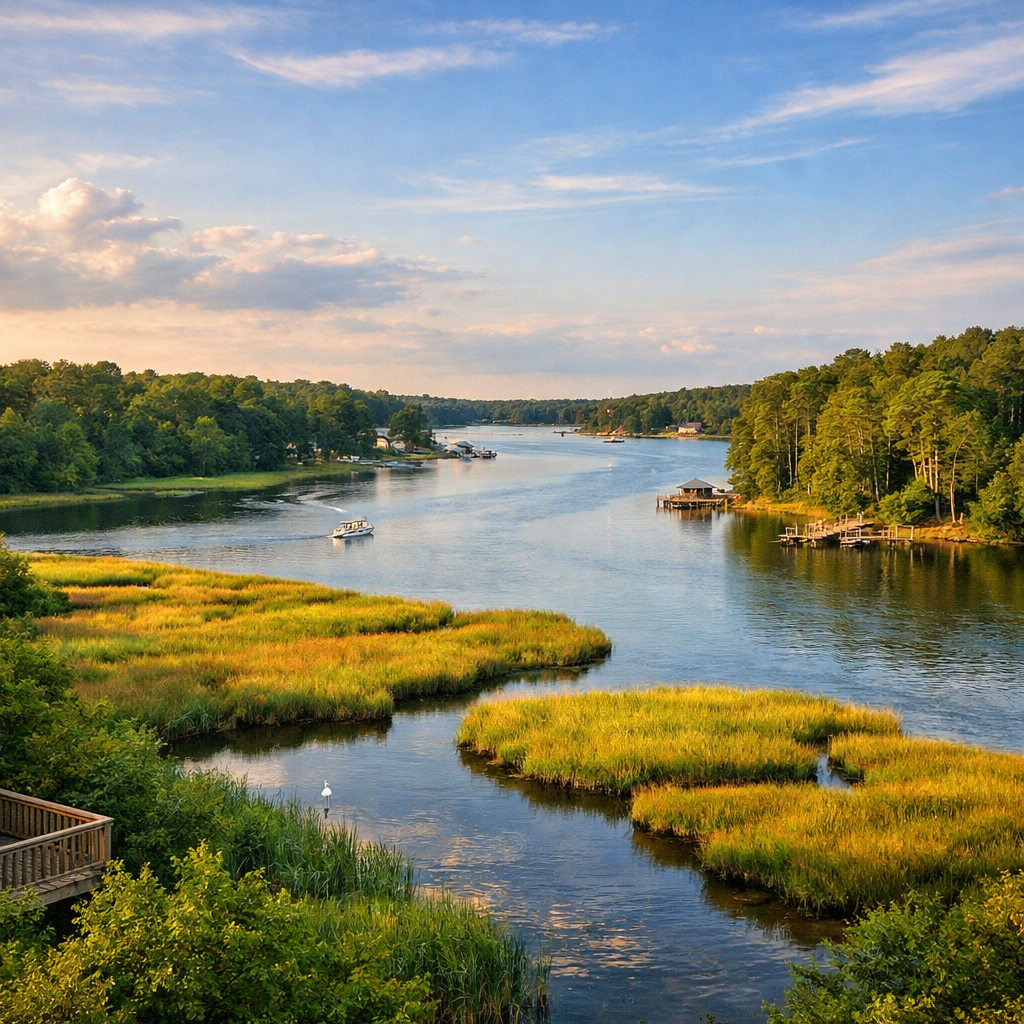
Chesapeake, Virginia, experiences a humid subtropical climate, characterized by hot, humid summers and mild winters. This climate supports a diverse range of flora and fauna, contributing to the region’s rich biodiversity.
Climate Overview
Throughout the year, Chesapeake’s temperatures vary significantly. Summers are typically warm, with average highs around 88.7°F (31.5°C) in July, while winters are milder, averaging lows of 33.1°F (0.6°C) in January. The city receives an annual average precipitation of approximately 50.52 inches, with the wettest months being July and August.
Environmental Conservation Initiatives
Recognizing the importance of preserving its natural landscapes, Chesapeake has implemented several land conservation programs. The Open Space and Agriculture Preservation (OSAP) Program allows the city to purchase development rights from willing landowners, ensuring that agricultural lands and open spaces are maintained. This voluntary program aims to protect the city’s rural character and natural resources.
Additionally, Chesapeake is actively involved in the Chesapeake Bay Program, a regional partnership dedicated to restoring the health of the Chesapeake Bay. This collaboration focuses on reducing pollution, restoring habitats, and promoting sustainable practices to ensure the bay’s vitality for future generations.
Community Involvement
Residents play a crucial role in these conservation efforts. By participating in local programs, adhering to sustainable practices, and staying informed about environmental issues, the community contributes significantly to preserving Chesapeake’s natural beauty and ecological health.
Understanding the local climate and supporting conservation initiatives are essential steps toward maintaining the environmental integrity of Chesapeake, ensuring a sustainable and thriving community for years to come.