

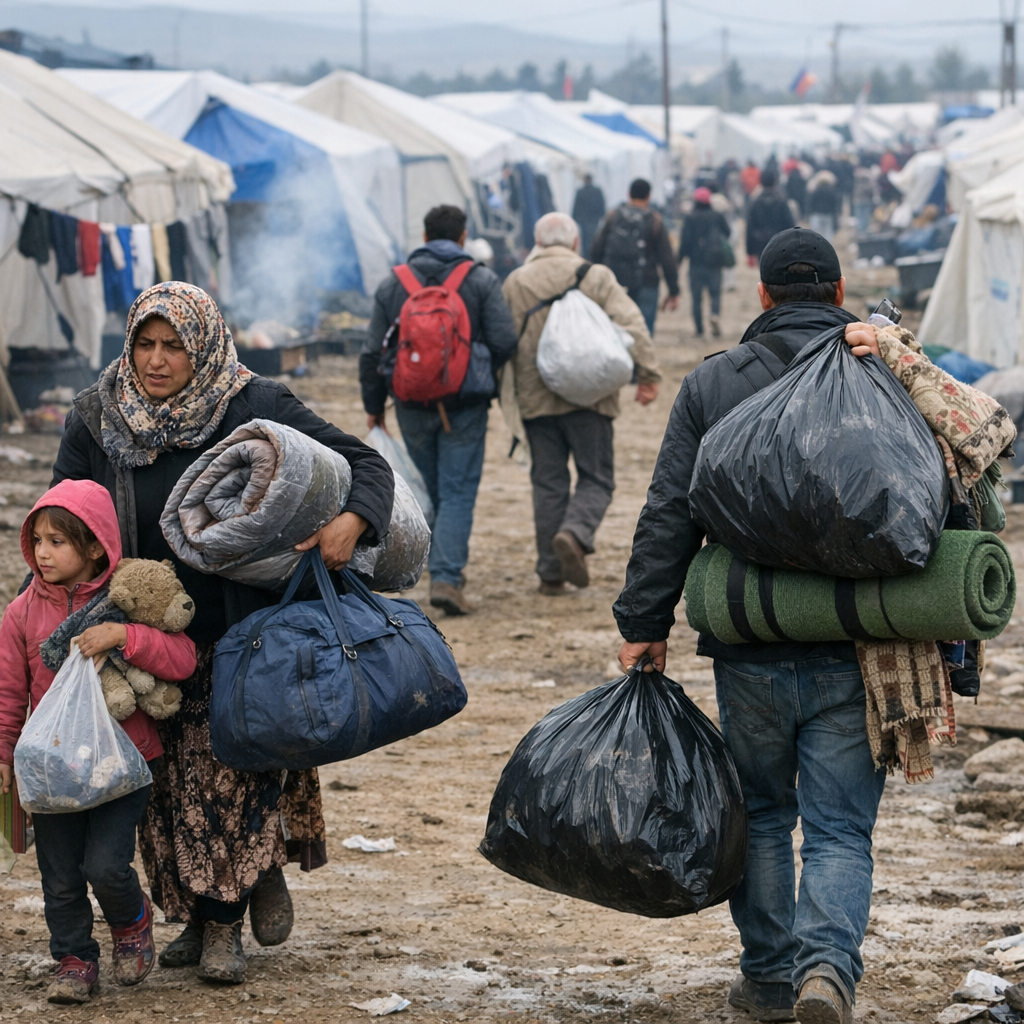
Every day, people are driven from their homes by war, climate disasters, persecution, or poverty. The current scale of forced displacement is among the highest ever recorded, and understanding its dimensions is crucial not just globally, but here in Chesapeake too—where we believe in looking beyond our borders and recognizing our shared humanity.
How many people are displaced—and why that’s changing
By the end of 2025, nearly 118 million individuals worldwide were forced to flee their homes, whether across borders or within their own countries—due to conflict, violence, or threats to their lives. That’s a slight decrease from a recent peak, but hardly a relief.
Many who return home still face danger—schools, health systems, infrastructure may be destroyed. For example, returns to countries like Afghanistan, Syria, and Sudan are up, but reintegration remains deeply challenging. Internally displaced persons (IDPs)—those who’ve fled but remained inside their country—number ~68.7 million.
What’s pushing people to move
Conflicts are growing in number and complexity. Wars in places like Sudan, Ukraine, Gaza, and parts of Africa are stretching humanitarian systems to their breaking points. Humanitarian aid is under extreme pressure—funding gaps, attacks on relief workers, and restrictions on access are making everything harder.
Climate change and natural disasters deepen the crisis. Heat waves, droughts, storms—often hitting places already dealing with conflict or poverty—are forcing people to flee without offering them the support or resources they need. Economic shocks—from food and energy prices to inflation—are worsening conditions. When the cost of living soars, many are pushed into situations where staying at home is no longer safe or viable.
Who is bearing the burden
The majority of displaced people are hosted in low- and middle-income countries—often neighboring the places people fled from—rather than wealthy nations far away. About 65% of refugees are hosted in countries next door to conflicts. Children are disproportionately affected: nearly 39% of refugees are under 18 years old, facing disrupted education and development.
Statelessness—that is, when people are denied citizenship—is also part of the picture, with around 4.5 million people without recognized nationality. That often means obstacles in accessing health care, work, or schooling. Returning home doesn’t always mean returning to safety; many return under dangerous or uncertain conditions.
Why global cooperation matters—and what can help
No single country or organization can solve displacement alone. International cooperation—through the UN, humanitarian agencies, agreements among nations—plays a vital role in keeping people safe, providing resources, and restoring homes. Yet that cooperation is being stretched thin.
Some promising signs: growing partnerships focused on climate, technology, and services are forming; regional bodies are stepping in to play peacekeeping and conflict mediation roles. These smaller, focused alliances are sometimes more nimble than global ones in addressing crises in real time.
But there’s a gap between what’s promised and what’s delivered. Funding tends to fall short, responses are often reactive rather than preventive, and political will wavers when conflicts are prolonged and complex.
What can we in Chesapeake—and everywhere—do
Learn the stories behind the numbers. Follow reputable news, support refugee voices, and engage with local organizations aiding displaced people.
Advocate for consistent, principled foreign policy. Every vote, every act of civic participation shapes how the U.S. engages with the world—how it funds aid, joins global agreements, and upholds human rights.
Support agencies making a difference. Whether through donations, volunteering, or spreading awareness, local effort matters—humanitarian crises may feel remote, but collective empathy has global impact.
Grasping the scale and complexity of today’s displacement crisis helps us better understand the power of cooperation—and the cost when it’s lacking. To build a safer, more just world, it’s all of our responsibility.