

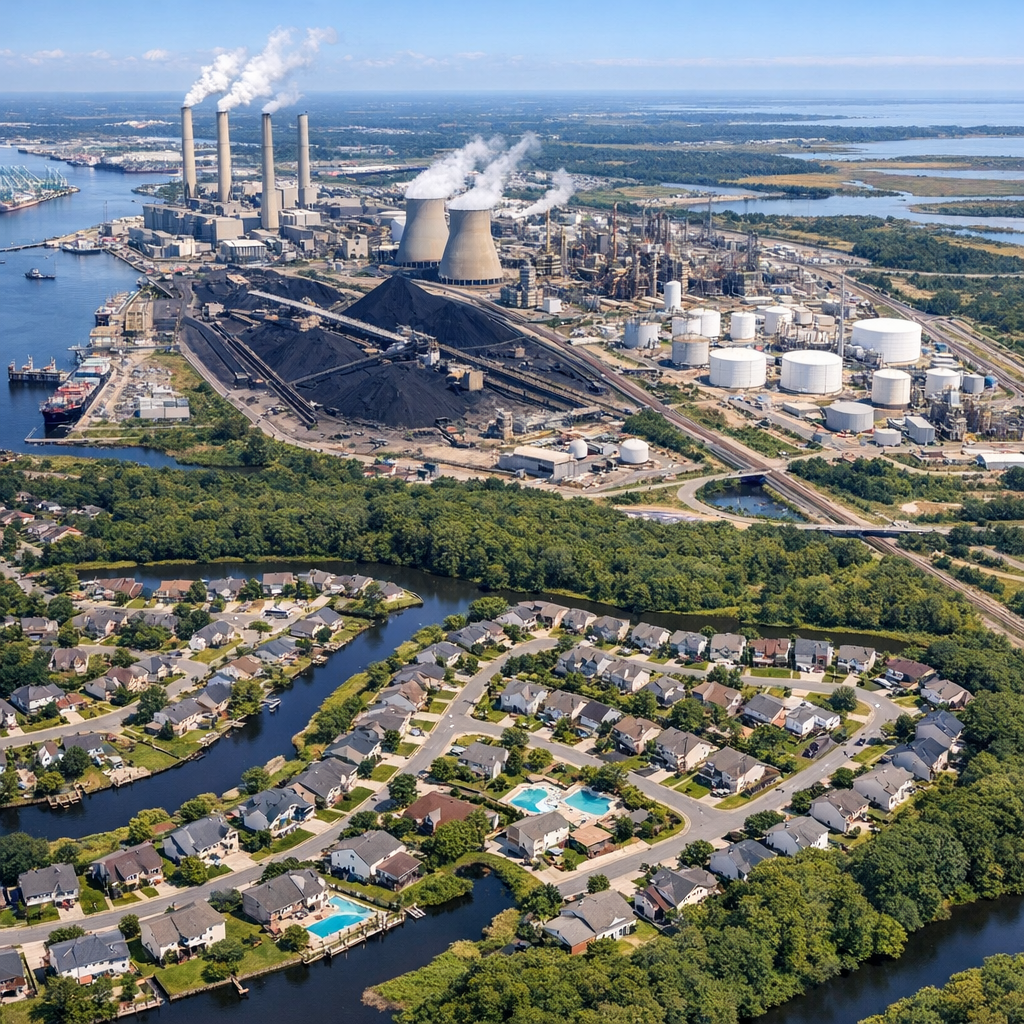
As national environmental policies evolve, their effects are felt deeply in communities like Chesapeake, Virginia. Recent developments highlight the intersection of federal initiatives and local environmental concerns.
Natural Gas Compressor Station Approval
In March 2026, the State Corporation Commission approved Virginia Natural Gas’s plan to construct a $90 million compressor station in Chesapeake. This facility aims to maintain natural gas pressure and flow, ensuring reliable service. However, the project has faced opposition from environmental groups and residents of nearby historically Black neighborhoods, who express concerns about potential pollution and environmental injustice.
Menhaden Research Funding
Virginia’s 2026 budget allocated $2 million to the Virginia Institute of Marine Science for a two-year study on menhaden populations in the Chesapeake Bay. This research addresses longstanding debates over the impact of menhaden fishing on the bay’s ecosystem, with environmentalists and anglers citing declines in species that feed on menhaden.
Community Response to Data Centers
The rise of artificial intelligence has increased demand for data centers, leading to proposals for new facilities in Chesapeake. Residents have voiced concerns about the environmental impact, including noise pollution and energy consumption, prompting discussions on sustainable development practices.
Federal Support for Chesapeake Bay Restoration
In May 2022, the EPA announced $40 million in funding from the Bipartisan Infrastructure Law for Chesapeake Bay restoration efforts. This investment supports projects aimed at improving water quality and promoting environmental justice, reflecting a commitment to the bay’s health and the communities that rely on it.
These developments underscore the complex relationship between national environmental policies and local communities. Chesapeake’s experiences highlight the importance of balancing infrastructure needs with environmental stewardship and community well-being.