

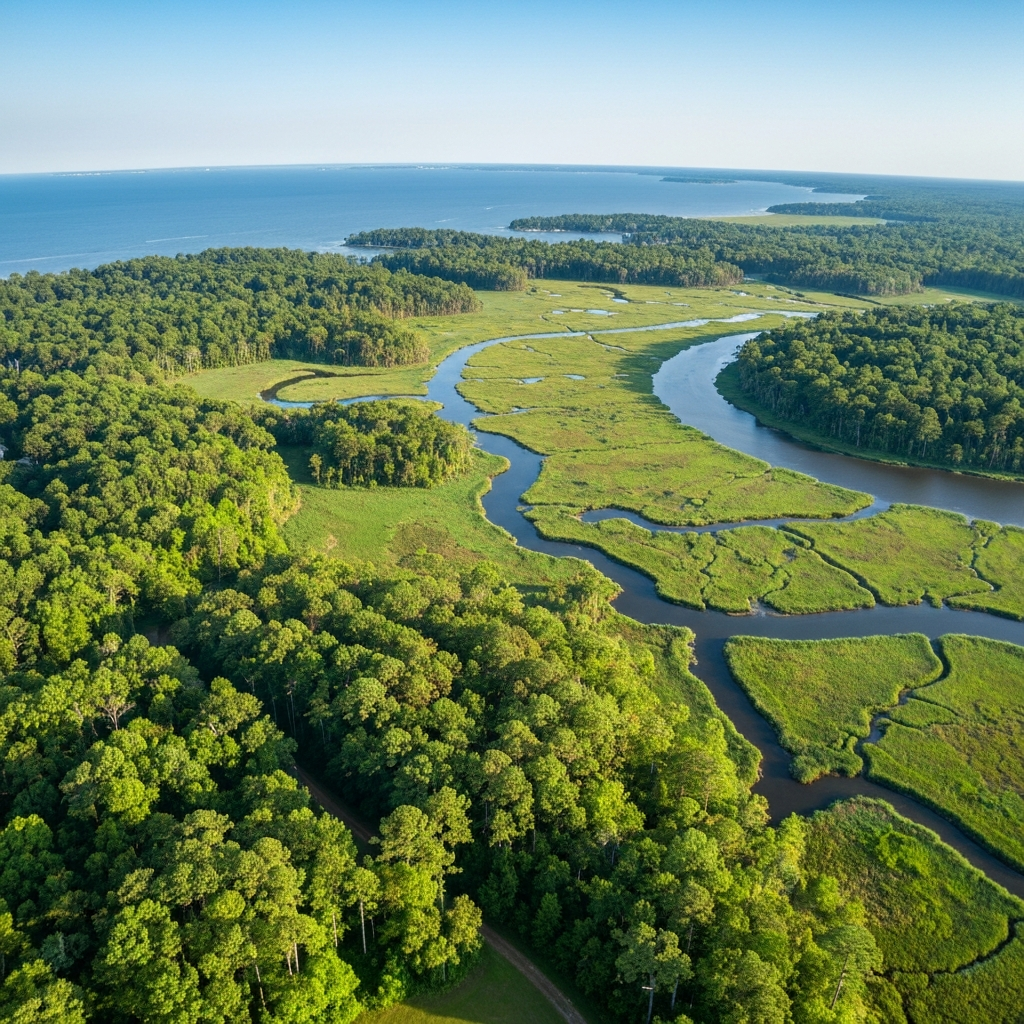
Chesapeake, Virginia, experiences a humid subtropical climate characterized by mild winters and warm, humid summers. This climate supports a diverse range of flora and fauna, contributing to the region’s rich biodiversity.
Climate Overview
In Chesapeake, average temperatures vary throughout the year. January sees average lows around 33.1°F and highs near 51.0°F, while July brings average lows of 72.0°F and highs reaching 88.7°F. Annual precipitation averages approximately 50.52 inches, with the wettest months typically being July and August. The region falls within Plant Hardiness Zone 8b, indicating a minimum temperature range of 15°F to 20°F.
Environmental Conservation Efforts
Chesapeake is actively engaged in various environmental conservation initiatives to preserve its natural resources and promote sustainability.
Land Conservation Programs
The City of Chesapeake administers several voluntary programs aimed at conserving land and maintaining the city’s natural open spaces and agricultural heritage. Notable programs include:
- Open Space and Agriculture Preservation (OSAP) Program: This city-wide competitive program allows the city to purchase development rights from willing landowners in exchange for a preservation easement on their property. Landowners retain ownership and can continue using the land for agricultural or open space purposes.
- NALF Fentress Encroachment Protection Acquisition Program (FEPAP): Focused on properties near NALF Fentress, this program involves the city purchasing property to prevent encroachment and preserve the rural and agricultural character of the area.
Chesapeake Bay Restoration
The Chesapeake Bay, a vital estuary for the region, has been the focus of extensive restoration efforts. The U.S. Environmental Protection Agency (EPA) announced over $44 million in grants to support water quality improvement, habitat restoration, and community stewardship in the Chesapeake Bay watershed. These funds aim to accelerate the restoration of the Bay and its surrounding environments.
Additionally, the Chesapeake Conservation Partnership, a coalition of organizations and agencies, is working collaboratively to conserve culturally and ecologically important landscapes. The partnership aims to protect an additional 2 million acres by 2025 and 30% of the Chesapeake Bay Watershed by 2030.
These concerted efforts reflect Chesapeake’s commitment to environmental stewardship and the preservation of its unique natural resources for future generations.